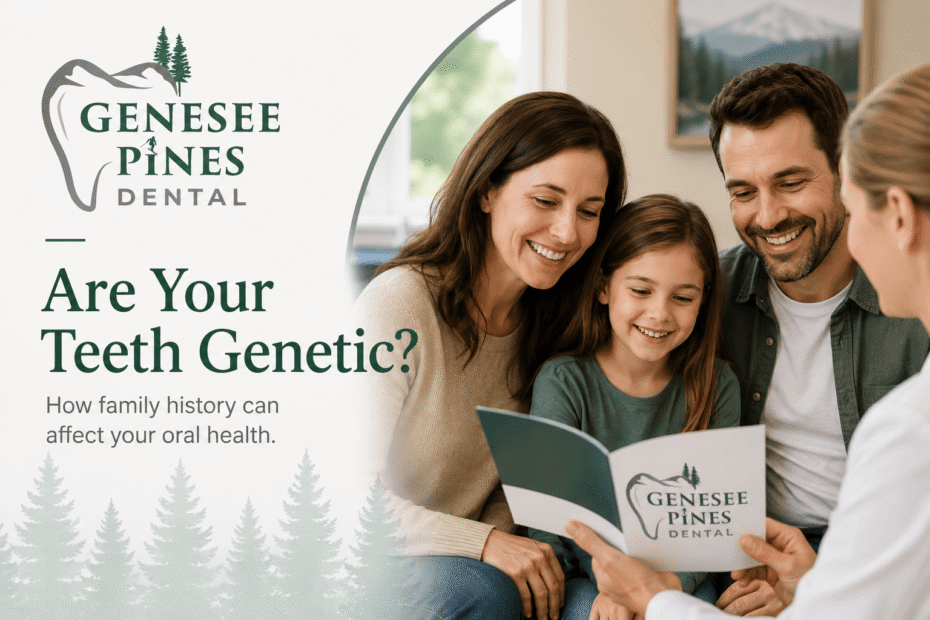
If everyone in your family seems to have cavities, sensitive gums, or similar dental problems, it is natural to wonder whether you inherited your teeth from your parents along with your eye color.
The answer is a little more complicated than yes or no.
Genetics can influence certain aspects of your oral health and your susceptibility to some dental problems. But your genes do not determine your dental future. Daily habits, diet, fluoride exposure, tobacco use, regular dental care, and many other factors can make an enormous difference.
Understanding your family history can simply give you and your dentist another piece of information to use when protecting your smile.
Are Cavities Genetic?
There is evidence that genetics can play a role in a person’s susceptibility to tooth decay, but cavities are not simply something you inherit.
Tooth decay develops when bacteria in the mouth interact with sugars and starches from foods and drinks. The bacteria produce acids that attack tooth enamel. Repeated acid exposure can eventually cause enough mineral loss for a cavity to form.
Saliva and fluoride can help protect teeth by replacing some of those lost minerals.
That means your risk of developing cavities comes from a combination of factors rather than a single “cavity gene.”
Your biology may influence your susceptibility, but factors you can control remain extremely important. Brushing with fluoride toothpaste, cleaning between your teeth, limiting frequent sugary foods and drinks, and receiving regular dental care can all help reduce your risk of tooth decay.
If your family seems particularly prone to cavities, tell your dentist. That information can be considered along with what we see during your examination and your individual history.
What About Genetics and Gum Disease?
The connection between genetics and gum disease is another area researchers continue to study.
Periodontal disease is an infection and inflammatory condition affecting the tissues that support your teeth. Plaque buildup is a major cause, but the National Institute of Dental and Craniofacial Research also recognizes genetics as one of several factors that can affect a person’s risk.
That does not mean someone with a family history of gum disease is destined to develop it.
Smoking, oral hygiene, certain health conditions, medications and other factors can also influence periodontal health. Regular dental examinations are particularly important because early gum disease may be much easier to manage than advanced periodontal disease.
If parents, siblings or other close relatives have experienced significant gum disease or tooth loss, mentioning that history to your dental team can be useful.
Do You Inherit Crooked Teeth?
Family resemblance can certainly extend to your smile.
Genetics contributes to the development of your teeth, jaws and facial structures. That can help explain why parents and children sometimes have similar bite patterns, tooth spacing or crowding.
However, genetics isn’t the entire story here either. Oral habits, tooth loss, dental development and other environmental factors can also affect the position of teeth and the bite.
Rather than assuming a child will need orthodontic treatment simply because a parent did, regular dental examinations allow the development of the teeth and bite to be monitored over time.
Family History Is Information, Not Destiny
One of the most useful ways to think about genetics and oral health is as a potential risk factor rather than a prediction.
Knowing that gum disease, frequent cavities or other dental problems run in your family can help start a useful conversation with your dentist. Your dental team can combine that information with your examination, X-rays when appropriate, oral hygiene habits, medical history and other risk factors.
Most importantly, having a family history of dental problems does not mean there is nothing you can do about them.
What You Can Control Matters
Regardless of your genetics, the fundamentals of maintaining good oral health remain important.
Brush your teeth twice a day with fluoride toothpaste. Clean between your teeth regularly with floss or another interdental cleaner. Limit frequent exposure to sugary foods and drinks. Avoid tobacco. Pay attention to changes such as bleeding gums, tooth sensitivity or persistent discomfort.
And keep up with regular dental examinations and professional cleanings based on the schedule recommended for your individual needs.
Your genes may help shape your starting point, but your everyday habits and preventive dental care can have a major influence on what happens next.
Talk to Genesee Pines Dental About Your Family Dental History
If dental problems seem to run in your family, tell us about them.
At Genesee Pines Dental in Golden, Colorado, we can consider your family history along with what we see during your examination to better understand your individual oral-health risks.
Whether you have concerns about frequent cavities, gum health, your bite, or simply want to stay ahead of potential problems, preventive care gives us an opportunity to identify concerns early and develop a plan appropriate for you.
Schedule an appointment with Genesee Pines Dental to discuss your oral health and how you can protect your smile for years to come.
Sources
NIDCR — Tooth Decay, NIDCR — Gum Disease, NIDCR — Oral Hygiene, and PubMed — Genomics of periodontal disease and tooth morbidity.